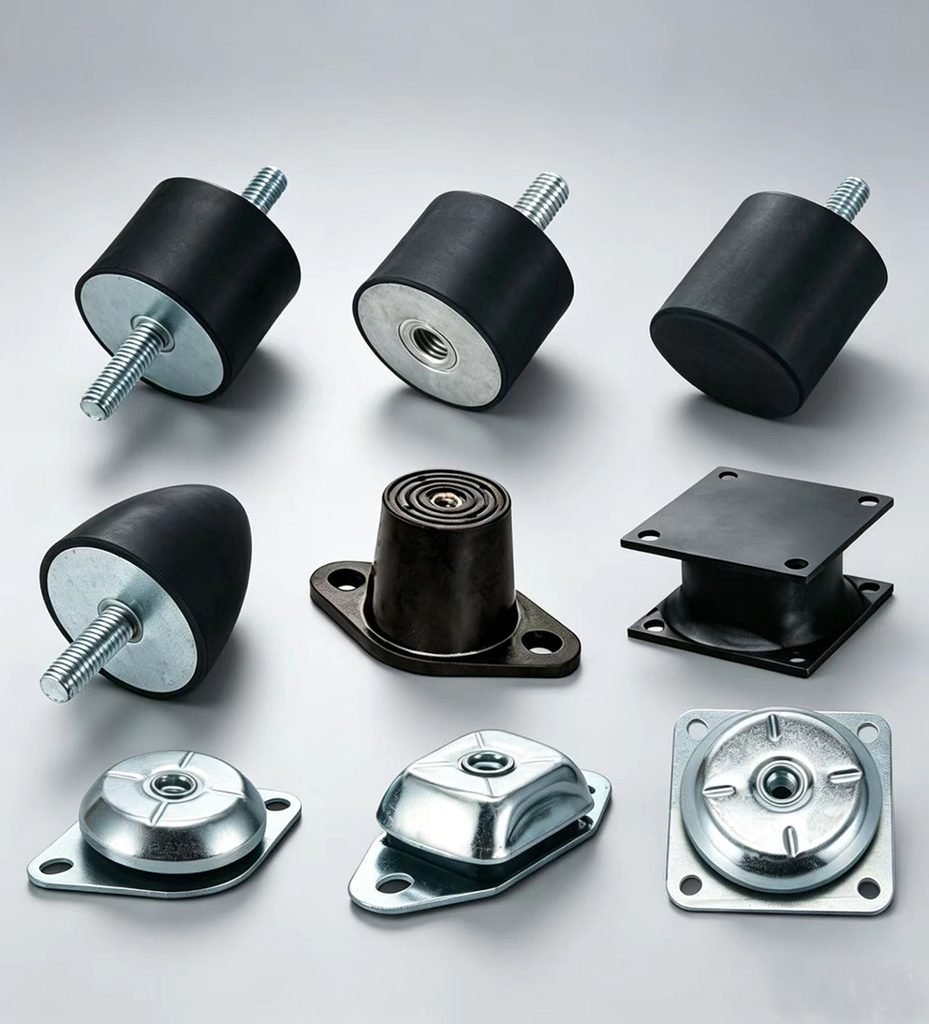
Rubber Vibration Mounts for HVAC and Air Conditioning Equipment
Heating, ventilation and air conditioning systems are widely used in commercial buildings, factories, hospitals, hotels, offices and residential facilities.
HVAC equipment often operates for long periods, and vibration from motors, compressors, fans and pumps can be transmitted to the building structure.
This can result in unwanted noise and vibration.
Rubber vibration mounts for HVAC equipment provide a practical solution for reducing vibration transmission and improving equipment stability.
Why Does HVAC Equipment Need Vibration Isolation?
Many HVAC components contain rotating or reciprocating machinery.
For example, compressors, pumps and fans can generate mechanical vibration during normal operation.
If the equipment is rigidly connected to the building structure, vibration can travel through floors, walls and supporting frames.
This may create:
- Structure-borne noise
- Mechanical vibration
- Equipment movement
- Fastener loosening
- Premature component wear
- Reduced comfort for building occupants
Rubber vibration mounts create a flexible connection that helps isolate the equipment from the supporting structure.
HVAC Applications for Rubber Mounts
Air Conditioning Units
Rubber mounts can be installed beneath or around air conditioning equipment to reduce vibration transmission.
Compressors
HVAC compressors can generate significant vibration.
Appropriate rubber isolators can help reduce vibration transmitted to the equipment frame and building structure.
Chillers
Large chillers may require vibration isolation because of their size, weight and continuous operating conditions.
Pumps
HVAC circulation pumps can generate vibration through their motors and rotating components.
Rubber mounts can provide elastic support and help reduce transmitted vibration.
Fans and Air Handling Equipment
Fans contain rotating components that can generate vibration.
Rubber isolators can be used where vibration needs to be controlled.
Benefits of Rubber HVAC Mounts
Reduced Vibration Transmission
The rubber element absorbs part of the vibration energy and reduces direct transmission into the supporting structure.
Noise Control
Reducing structure-borne vibration can also help control unwanted mechanical noise.
Equipment Protection
Vibration isolation can reduce mechanical stress on equipment and supporting structures.
Improved Stability
Rubber mounts provide elastic support and can help keep equipment securely positioned.
How to Select HVAC Rubber Mounts
Equipment Weight
Determine the total operating weight of the equipment.
Then evaluate the load on each mounting point.
Operating Speed
Fan, motor and compressor RPM should be considered when selecting mount characteristics.
Mount Stiffness
The stiffness of the rubber element affects the amount of deformation and vibration isolation performance.
Installation Environment
Consider whether the mount will be exposed to:
- Water
- Humidity
- Outdoor weather
- Oil
- Chemicals
- Temperature changes
The rubber compound should be selected accordingly.
Rubber Materials for HVAC Applications
Natural rubber can provide good elasticity and dynamic performance.
EPDM can provide good resistance to weathering, ozone and moisture for appropriate applications.
NBR may be considered where oil resistance is required.
The correct rubber material depends on the specific equipment and environment.
OEM HVAC Rubber Mounts
HVAC manufacturers may require custom rubber mounts to fit specific equipment designs.
Custom products can be manufactured according to:
- Drawing
- Sample
- Dimensions
- Rubber hardness
- Load capacity
- Metal component specifications
- Mounting configuration
Frequently Asked Questions
Where are HVAC rubber mounts used?
They can be used for air conditioning units, compressors, chillers, pumps, fans and air handling equipment.
Can rubber mounts reduce HVAC noise?
They can reduce structure-borne vibration, which may help reduce noise transmitted through the building structure.
Can HVAC mounts be customized?
Yes. Custom dimensions, rubber compounds, hardness and metal configurations can be developed for OEM equipment.
Conclusion
Proper vibration isolation is important for HVAC systems operating in commercial, industrial and residential environments.
Rubber vibration mounts can help reduce vibration transmission, improve equipment stability and reduce structure-borne noise.
We supply standard and custom rubber vibration mounts for HVAC equipment and other industrial applications.
Contact us for OEM rubber vibration mounts according to your equipment requirements.