Choosing the Right Rubber Material for Vibration Isolation Mounts
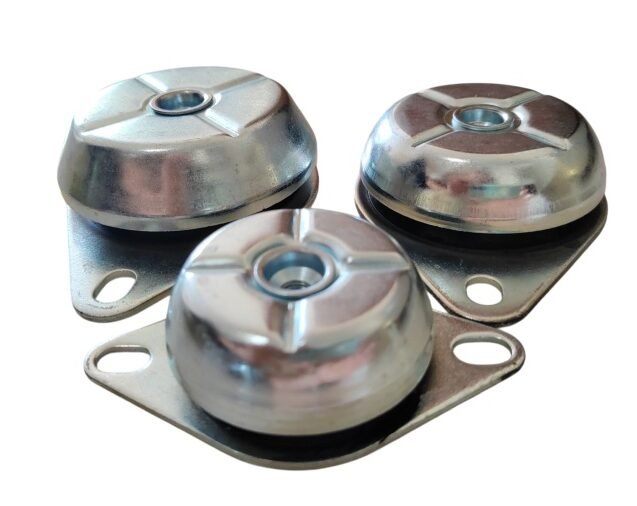
Rubber vibration isolation mounts are widely used in industrial machinery, generators, compressors, marine equipment and various mechanical systems. However, selecting the right rubber material is just as important as choosing the correct mount design.
Different rubber compounds have different properties, including elasticity, temperature resistance, oil resistance, weather resistance and mechanical strength. Choosing an unsuitable material may reduce product performance and service life.
In this guide, we explain the common rubber materials used in vibration isolation mounts and how to select the right compound for different applications.
1. Natural Rubber (NR)
Natural rubber is widely used in vibration isolation applications because of its excellent elasticity and dynamic properties.
Its main advantages include:
- Good vibration isolation performance
- High resilience and elasticity
- Good resistance to repeated deformation
- Suitable for many general industrial applications
Natural rubber is commonly used in machinery mounts, generator mounts and industrial vibration isolators.
However, natural rubber may not be suitable for environments involving prolonged exposure to oils, fuels or extreme temperatures.
2. Nitrile Rubber (NBR)
Nitrile rubber is particularly useful in applications where oil and fuel resistance are important.
Its main characteristics include:
- Good resistance to mineral oils
- Good resistance to many petroleum-based fuels
- Suitable for oil-exposed industrial environments
- Good mechanical properties
NBR rubber mounts are often considered for equipment operating near lubricants, hydraulic oils and petroleum products.
The actual suitability depends on the oil type, temperature and exposure conditions.
3. EPDM Rubber
EPDM rubber is known for its excellent resistance to weathering, ozone, water and outdoor environmental conditions.
Its advantages include:
- Good weather resistance
- Excellent ozone resistance
- Good resistance to water and moisture
- Suitable for many outdoor applications
EPDM can be considered for outdoor machinery and equipment exposed to changing weather conditions.
However, it generally has poor resistance to petroleum-based oils and fuels.
4. Neoprene Rubber (CR)
Neoprene rubber offers a balanced combination of mechanical properties and environmental resistance.
Its characteristics include:
- Good weather resistance
- Good ozone resistance
- Moderate oil resistance
- Good mechanical durability
Neoprene is used in various industrial and marine-related applications, depending on the operating environment and compound formulation.
5. How to Select the Right Rubber Compound
Before choosing a rubber material for vibration isolation mounts, consider the following factors:
Operating Temperature: Determine the minimum and maximum temperatures during equipment operation.
Oil and Chemical Exposure: Identify whether the rubber will contact engine oil, hydraulic oil, fuel or other chemicals.
Environmental Conditions: Consider exposure to sunlight, ozone, moisture, saltwater and outdoor conditions.
Load Requirements: The rubber compound must provide suitable stiffness and deformation characteristics for the application.
Expected Service Life: Consider operating hours, vibration cycles and maintenance requirements.
6. Custom Rubber Compounds for Industrial Applications
Different machines require different rubber properties. A suitable rubber compound should be selected according to the actual working environment and performance requirements.
At Zhengbai Rubber, we focus on rubber vibration isolation products for generators, air compressors, marine equipment, construction machinery and other industrial applications.
We can discuss material selection, product dimensions, hardness and mounting configurations according to your project requirements.
Conclusion
Choosing the correct rubber material is essential for achieving reliable vibration isolation and long-term performance.
Natural rubber, NBR, EPDM and Neoprene each offer different advantages. The best choice depends on operating temperature, environmental exposure, chemical contact and mechanical requirements.
Need help selecting the right rubber compound for your equipment? Contact Zhengbai Rubber for a customized solution.